
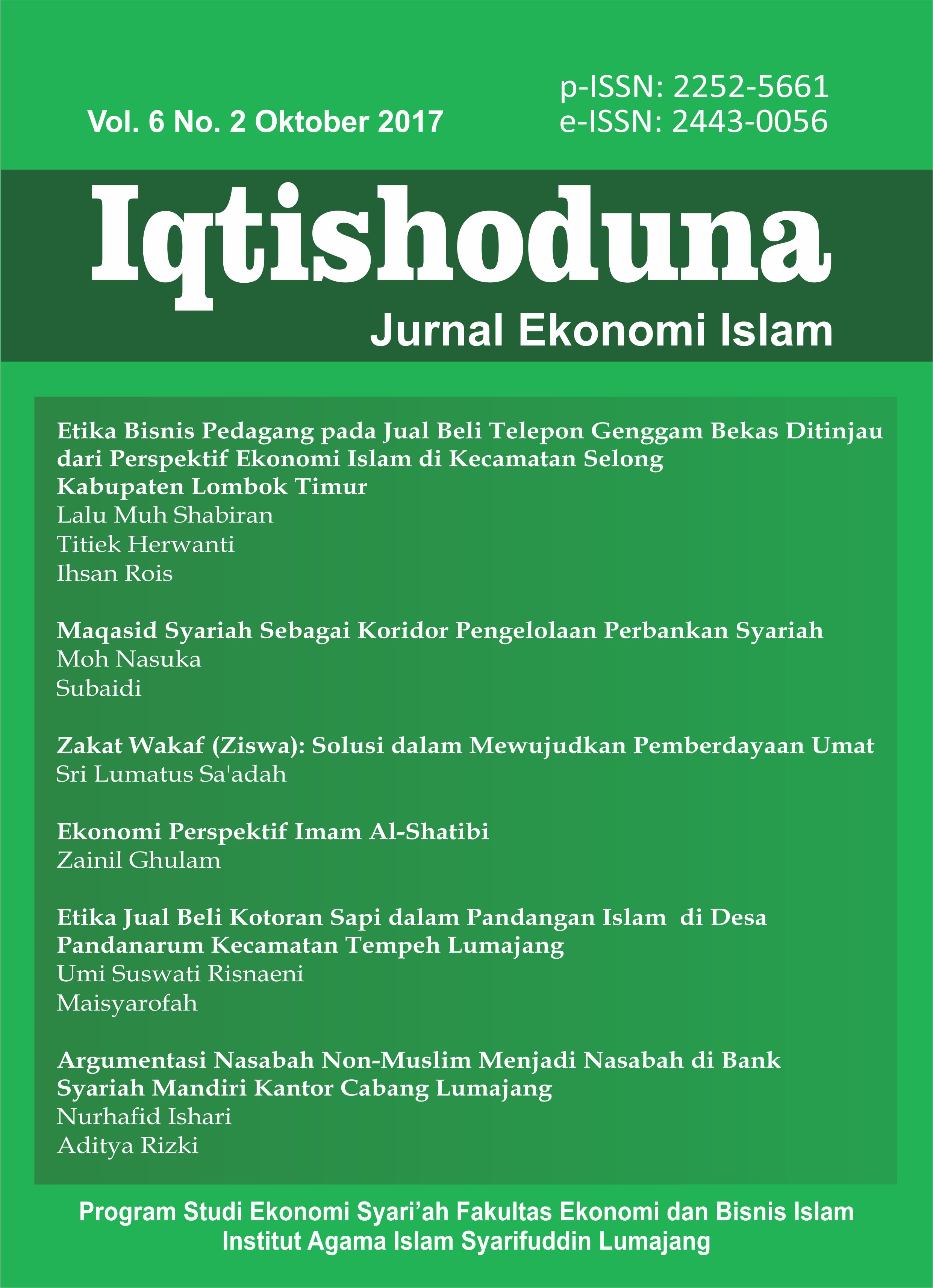
Zakat Wakaf (Ziswa): Solusi dalam Mewujudkan Pemberdayaan Umat
Keywords:
zakat wakaf, empowerment of peopleAbstract
Zakat is believed as a worship that serves to balance social relations. Through zakat wakaf (ziswa), the distance between the person is located and the disadvantaged person can be brought closer. People have an obligation to help and care for the hard people who live around them. In addition, ziswa also works so that the circulation of wealth is not just spinning among a group of people just standing. By learning, people are actively participating in empowering the economically disadvantaged societies. That goal can be realized if zakat is managed with professional management, accountable, and modern. Zakat has been managed by zakat fund management institutions.
Downloads
References
Babun Suharto, Zakat Untuk Pendidikan:Opsi strategis Sumber Daya Manusia, Jember: Stain Press,2013.
Didin Hafidhuddin, Zakat Sebagai Tiang Utama Ekonomi Syari’ah, www.pkpu.or.id, diakses 310 Juli 2017
Yusuf Qardawi, Hukum Zakat: Study Komparatif Mengenai Status dan Filsafat Zakat Berdasarkan Qur’an dan Hadits, (Bogor : Pustaka Litera Antarnusa, 1996), cet. 4.
Mannan, M.A., Teori dan Praktek Ekonomi Islam, (Jogyakarta: Dana Bahakti Wakaf, 1997)
Departemen Agama RI, Undang-Undang Republik Indonesia Nomor 41 Tahun 2004 tentang Wakaf, (Jakarta: Dirjen Bimas Islam dan Penyelenggara haji, 2005)
Depag RI, StrategipengembanganWakaf, 55-58.
Kementerian Agama RI, Model Pemberdayaan Wakaf Produktif, (Jakarta: Dirjend Bimas Islam, 2010)
Mahfud, Politik Hukum Di Indonesia, Jakarta; LP3ES, 1998
http://psmktsukabumi.blogspot.com/2010/07/potensi-wakaf-tunai-di-indonesia.html. diakses tanggal 15 Juli 2017.
http://www.bwi.or.id/index.php?option=com_content&view=article&id=80&Itemid diakses tanggal 10 Juli 2017.
http://psmktsukabumi.blogspot.com/2010/07/potensi-wakaf-tunai-di-indonesia.html diakses tanggal 10 Juli 2017.
Downloads
Published
How to Cite
Issue
Section
License
Copyright (c) 2017 Sri Lumatus Sa'adah

This work is licensed under a Creative Commons Attribution 4.0 International License.
The journal can be accessed publicly, which means that all content is provided freely accessible without charge to either the user or the institution. Users are allowed to read, download, copy, distribute, print, search, or cite to the full text of the article did not have to ask permission from the publisher or author.


